


How do we deal with Artificial Intelligence, expertise, and pedagogy in English Language Teaching? We’re looking for the answers in this interview with Joshua Paiz, author of Collaborative AI on this episode of the DIESOL podcast!
How do we deal with artificial intelligence expertise in pedagogy in English language teaching? We’re looking for the answers in this interview with Joshua Payes, author of Collaborative AI, on this episode of the DIESOL Podcast.
Brent Warner 0:26
Welcome to the DIESOL Podcast, where we focus on developing innovation in English as a second or other language. I’m Brent Warner, professor of ESL, and I’m here with the wonderful Ichelle Reyes, as always, award-winning educator in innovation, all the fun things, Ichelle. How are you?
Ixchell Reyes 0:42
I am allergy free.
Brent Warner 0:46
Hey, you sound much much better than last time.
Ixchell Reyes 0:49
Than the last episode, yeah! How are you?
Brent Warner 0:50
Good, I think. Yeah, we’re we’re trying to we’re trying to pre-record several episodes because, as we’ve mentioned, I’m going to be gone for more than a month, and so so it’s not quite lined up with the exact timing of everything, but we’re getting close here. So, so we have a guest today. It’s been a little while.
Ixchell Reyes 1:10
It has been a while. It has been a while.
Brent Warner 1:10
Yeah. So, Ixchell go for it.
Ixchell Reyes 1:12
So we are here with Joshua Paiz, and this is the introduction from the University of Toronto press page. So Joshua, please add anything you want to it. He is the an assistant dean for technology, trades, business, and hospitality at Frederick Community College, and has 15 years of classroom experience in English language teaching and teacher education. And there’s probably a lot more there. That sounds like too way too short.
Brent Warner 1:42
Yeah, especially especially with all the all all the all the like references you have inside of the book. I’m like, there’s way way more going on.
Ixchell Reyes 1:51
There should be initials at the front of that… of all these titles. (Laughter)
Joshua Paiz 1:55
Yeah, So I guess the the thing that I would add with this transition to from faculty life to administrative life also came a little bit of a transition in disciplinary positioning, right? So TESOL and applied linguistics have been home since 2011, right? More recently, I’ve started switching into applied computer science and engineering management. So I’ve moved out of the English language classroom and into the programming classroom very recently at Frederick Community College, but the number of applied linguistics principles and pedagogical practices I rely on when teaching introductory programming are-it’s a very high end, right? So yeah, yeah, I would say the sort of big shift for me has been moving from a purely pedagogical view of artificial intelligence to a more technically grounded one, right? Which I hope adds a little bit of richness to to the perspective that I can bring.
Brent Warner 2:55
Yeah, for sure. And one of the things I’ve noticed too on on LinkedIn, you’re kind of often getting these new updates, like new certificate, new new, and I’m like, dang, dude, you’re busy with, and like, but but it’s never recently, anyways. It’s not ELT stuff. It’s you know more more of these types of like, hey, you know, like you said, computer programming or things like that. And I can’t remember exactly what they are, but lots have been coming through.
Joshua Paiz 3:21
Yeah, so I’ve been doing a lot more in the management space and more in just kind of general pedagogical practices with ACUE, right? But then I also, as I move through my my 40s now, I’m much more excited to do things just to see if I can right. So something a lot of people don’t know is that I started as a computer science student when I was 18 and failed miserably. Then went back to computer science later on in life and realized that I just needed a problem space that I could apply it to. And the problem space for me is education, right? And then it clicked, and so now I am actually a doctoral student once again at Penn State, pursuing a Doctor of Engineering degree, just to see if we can right. Wow! But if that works, I’ll be working on AI decision support for community college leadership.
Brent Warner 4:13
Nice. All right. Well…
Ixchell Reyes 4:15
Very much needed.
Brent Warner 4:16
For real. And today we are talking about this. I was, you know, so I had read this ahead of time. You asked me to, you know, preview it, and and I did read it, but I kind of didn’t get the feel like it’s a big hefty book, right? Like it’s pretty thick! (laughter)
Joshua Paiz 4:36
Especially – so that’s the second book on AI that I did. The first one was with University of Michigan Press with Rachel Toncelli and Ilka Koska from Northwestern, and that was just a it’s a wee little thing, right? Because it’s a brief instructional guide. This is like the the beefy cousin, right? Yeah, it’s a big one.
Brent Warner 4:57
Yeah, we’ve been wanting to get Ilka on the show for a while. We’ll have to work on that, but yeah,
Joshua Paiz 5:03
I’ll have to give her a nudge.
Brent Warner 5:05
It’s totally my fault. So Ilka, if you’re listening, it’s my fault that we haven’t made it work yet. So, so before we get started with everything, so you did some introduction of yourself, what’s going on, but let’s also talk just a bit about the book before we dig into some specific questions and ideas, which is like, what is what’s the big idea, or what are you hoping that people will get out of this book, Collaborative AI? You know, what was your your dream or your your intention when you sat down to write it?
Joshua Paiz 5:32
Yeah, yeah, I would say the intention when I sat down to write it was kind of to respond to those initial anxieties in the early days of AI in education, about AI replacing teachers, right? About AI replacing sort of student cognitive ability, and we can quibble back and forth on whether or not that nightmare is becoming a reality. But it was really to respond to that that initial anxiety, right, and to provide a sort of framework for us to take a more, like the title says, a more collaborative approach, right? Because I think if we view things as a joint effort, as joint interaction. So I come from the socio-cognitive school of applied linguistics, right? Which says we are not just individual interlocutors making our way through the world. We make sense of the world through our linguistic tools, through our interactions with our socio-culturally relevant others, right? And now we have a new socio-culturally relevant other, and it is these generative AI tools, right? So how do we engage in this sort of shared meaning making and shared navigation through the world? And that was sort of the big idea that I was hoping to get across, and that’s why I was very sort of keen on. There’s a chapter in that book that sort of maps socio-cognitive principles to the emergence of artificial intelligence and to how we go about sort of teaching, and I saw that chapter as sort of the theoretical lynchpin for the entire book, right? To undergird this idea of this is what meaningful collaboration can look like, not what it should look like, but one possibility, right?
Brent Warner 7:10
Yeah, and one of the things I like there too is that like this is how I’ve tried to approach the conversations for me, anyways. Is like there are scary times and there are really cool times, and we should lean into both, right? Like, I mean, we should be concerned about the scary things, and we should we should explore and take joy in the things that are fun. And I feel like oftentimes I feel alone in that approach, where it’s like I can say it’s good and I can say it’s bad. And you’re one of the few people. I mean, there are other people out there who do take that, but it’s not. It feels like not a lot. Like if it feels maybe it’s just the algorithms pushing the one side or the other all the time, like the extreme takes. But like I want my middle ground,
Joshua Paiz 7:49
Right? Right. I’ve always been a fan of of middle grounds. So before I got into AI and language teaching, which was early around that sort of advent, because I was working on a master’s degree in applied computer science at the time, so I was already in that sort of more technical space. I did a lot of work on gender and sexuality in language teaching. That’s where I spent the first sort of 1010, so 10 or so years of my career, and I always advocated for a middle ground there because we are all at different points in the conversation. Same thing with AI integration. We are all at different points, so we need to cast a wide net, right, or a big tent, if you prefer the the TESOL metaphor. But I think people like the extremes, if I may, Brent. I’m on the AI leadership steering committee at Frederick Community College, and oftentimes we have camps there, the sort of AI evangelist, and then the AI resistors, which you need both voices. But oftentimes, I will surprise either of the two camps when I take a more sort of middle ground, right? Because the AI resistors see me as because I’m the assistant dean for the School of Tech and Trades, they see me as the AI evangelist, being very gung ho, right? And then the my fellow sort of AI enthusiasts, they’re like, “Wait, you’re you’re telling us that we need to sort of pump the brakes here? I’m like, “Yes, I am, and here’s why. Right, so I agree. We need both. We need that sort of middle ground, you know.
Brent Warner 9:14
Yeah, I have that very same experience. I know well what you’re talking about. You know, in charge of the AI task force on our campus, and it’s like just make a lot of assumptions about what my approach is before talking to me about it. So, all right, well, let’s get into some actual practicalities here. So, like, there’s some real things inside, and one of the things is that you know the AI grammar corrections, right? Grammarly or whatever else is going on, and whether you know one explaining to students sometimes that Grammarly is AI is you know it’s like they’re not it’s not giving it AI but let’s just talk about that or possible you know it could just be even running it right through you know whatever Gemini or or whatever tool they’re using and then they just kind of accept all right okay yes yes yes this is good accept all. And don’t really look at it. So, from your perspective, how do we engage real dialog with the students about these tools and thinking critically about the changes they’re accepting or not accepting? Like, what? How do how do we make that step with our students?
Joshua Paiz 10:14
Yeah. So, for me, I think there are two important parts of this. Right. First is sort of modeling desired behaviors, right? When I was doing teacher education at Montgomery College and working with people who were new to the area of TESOL, right? I would oftentimes tell them you shouldn’t assume that your students know anything when they enter the room with you, right? They know what you teach them. That’s what you can safely assume that they know, right? I say the exact same thing to new faculty members that I hire for computer science and cybersecurity. Don’t assume that your students sitting in front of you know how to use a command line just because they are in a technical degree. I can almost guarantee you they do not, right? They know it if you teach it to them. Which means if we want our students to sort of acquire those habits of mind of sort of critically engaging with the output, questioning whether or not this changes intentionality or it changes tone or it changes the message, we have to model that for them, right? Which means if we as educators are going to value that habit of mind, we have to carve out time in our classes to demonstrate it for them, to show them why it matters, right, and then give them a chance to to practice in a low stakes environment, right, through more sort of formative as opposed to summative assessment, right. The other thing that I think goes hand in hand with this is the world moves so grossly fast, and the world of AI moves even faster. Right? I remember getting feedback not just for this book, but for artificial intelligence, real teaching, the book that I did with Rachel and Ilka, where people, where the reviewers like, this isn’t true anymore. I’m like you’re right. It wasn’t, but it was true in 2024 when we wrote that chapter, right? It was marginally true in late 2024. I know it’s no longer true. This is just the nature of the publishing beast, right? So creating opportunities for our students to slow down and to force them to hit the brakes, right, is another sort of piece of that puzzle to me. Right, so for me, this would be building in classroom activities where either in small groups or one-on-one. Right, if you have that kind of time, a smaller class size. Right, having them actually defend one of the decisions. If they’re going to go ahead and click apply all, then okay, great. Let’s look at one of those, and you tell me why this is better, right? And if your only answer is, well, the AI said so, okay, well, that’s that’s (unclear) So let’s let’s dig into this.
Brent Warner 12:57
Yeah.
Joshua Paiz 12:57
Let’s consider human alternatives.
Brent Warner 13:00
I think that is the point where it’s like, until now, teachers have just been able to say, “Well, okay, that’s what’s going on. But now we can turn that back around into our lessons, into our learning, into our pedagogy, and like maybe consider that that has to be a part of the conversation. It’s not just going to be a default to slide by and say like you can or can’t do it, but instead we say, “Well, let’s actually dig in and check out that thinking. And it goes beyond just the language, right? It builds into critical thinking. It builds into like understanding of what’s going on with AI. All of those things as well.
Joshua Paiz 13:34
Yeah, and the one other thing that I would say is, I know that in in applied linguistics in TESOL, we sometimes feel like the lone voice. Oftentimes, because we are service disciplines, you know, so we’re sort of relegated to our corner of of campus, right? But we are not alone in facing this problem. The one thing that I’ll say, we have very similar issues in computer science education right now of not getting students to just accept the recommendations from it’s called IntelliSense in most development environments, it’s basically a grammar and coding buddy, but it is AI powered, just like Microsoft Editor is if you’re using Word or Grammarly. So getting those students not just to accept the recommendations of the IntelliSense and forcing them to slow down has also then become a similar problem in computer science as it is in TESOL and applied linguistics for us, right? So I’ve seen more computer science educators, like I’ve seen more TESOL educators, saying, “Okay, great. If production can be so fast and so relatively accurate, then we’re going to take class time, and we are going to force you to slow down. And so I have a one of my computer science faculty members. For the first five weeks of his intro to programming class, they are not in a computer lab. They are in one of my math classrooms that’s surrounded by whiteboards, and they are working longhand, right? Because it forces the student to slow down.
Brent Warner 15:01
Love it.
Ixchell Reyes 15:04
There’s a lot going on with AI and accessibility, which also helps teachers and other classes supports their ELLs. What are some easy wins that teachers can make for accessibility that will also help out ELLs?
Joshua Paiz 15:18
Yeah, and understand that for those of us that work in the public education environment, right? So, Brent, I believe you’re at community college out in California. You, like us at Frederick Community College, we are going to be bit by federal accessibility guidelines, and here, AI is a great potential tool. I think if you get used to working from those sort of principles of universal design, and if you are the kind of educator who, let’s say that you are a mainline educator in the K 12 environment, and you have a lot of English language learners in your classroom because you’re using that sort of push in model, if you have a favorite AI tool, and you either set up a gem if you’re in Gemini, or a project if you’re in Clod, right? That has some universal design rubrics, right, and some notes on what good universal design is, whether those are coming from AQ or Quality Matters. That part doesn’t matter, but give it that sort of foundational knowledge, and then start pushing ideas through it, right? Because one of the things that we know is oftentimes those modifications that we might make to help English language learners, so things like explaining jargon, or if we’re working with lower proficiency students, simplifying sentence structure, right, or building in purposeful repetition, those aren’t just things that help English language learners. Those are things that help all students, right? And a lot of those come out of that sort of space of of universal design, right? So that’s the one thing that I would say. The other thing that I would say that can be very very helpful, especially for somebody who, despite the family name, grew up in a very monolingual, monocultural environment in a rural farming town in North Central Ohio, having it check for potentially culturally nuanced language that’s just second nature to you, but that make multilingual students kind of go, what is another sort of helpful accessibility piece. The other thing that a lot of people don’t think about that’s not directly related to English language learners, but to accessibility for all students, is a decent number of our especially male male at birth students struggle with color deficiency in vision. Right. So if you’re giving them some sort of investigative task that relies on color-coded images, some of your male students are going to struggle with that, right? I’m red-green deficient, and I remember in kindergarten being so proud of this little tree that I colored. But then the school psychologist called my parents because they thought that I was depressed because I have brown and the trunk green, right? They’re like “why did (unclear) the dead tree?” I’m like, no, that’s the perfect tree (laughter)
Joshua Paiz 18:09
So using AI, especially multimodal AI, can be helpful with that. I mean, I use it again, colorblind. So I will occasionally, if I’m not sure about an outfit, snap a picture, send it to Gemini and be like, “Do these colors work together? You know, and it will be like, “No, bro, try again.” (laughter) God-awful, or no, that works, right? So there’s those other sort of accessibility pieces that we sometimes don’t think about, right? Especially if we are ourselves neurotypical or have normal normal color vision or even normal normal regular vision, right? So those are some of the accessibility pieces that sort of come to mind when I think of of that question.
Brent Warner 18:53
And I like that idea of like setting setting up a few spaces, right? That that just kind of you can filter the work you’re already planning through, right? And it’s just like, okay, this is not about changing what I’m doing. It’s about just making sure it’s more accessible to whatever group. And so, so it doesn’t have to be an overhaul, but it could be, for example, if you you’re putting it into a Canvas online learning management system, and you’re like, hey, is the contrast enough here? Right? Yeah. Is the you know just simple things like that? Right. And so that can help other people, or you know, it can help out with you know everybody.
Joshua Paiz 19:30
Yeah, and then the two things that I would add, just sort of listening to you speak. One, I know a lot of educators are falling in love with Notebook LM, right? Which, if you’re not for the listeners, if you’re not familiar, this is a product from Google, so it’s running off of the Gemini large language model underneath. But you can upload a knowledge base to it, and it’s kind of designed as a sort of study aid, for for lack of a better term. You work inside of these notebooks; they’re constrained to a single topic. They’ll default to the knowledge base that you give it first, so the files you upload first before it will go out and look to the internet. But these things are great for creating instructional resources, right? So it’s pre-designed, it’s pre-coded to generate things like quizzes and infographics and podcasts, et cetera, right? So that’s that other sort of accessibility piece. We know that students have different preferences for how they learn. I’m not going to call them learning styles because, again, that’s science that we can debate quite heavily. But they have different preferences for how they learn. So, for a multilingual learner, yeah, that traditional lecture might not have landed with them, right? But that doesn’t mean that you have to spend hours recreating if you have already made Notebook LM part of your workflow, you can recast that lecture that may be recorded, or you have the written lecture notes for, into something else that might help those learners re-engage with that content. The other thing that comes to mind is I would advise caution, especially to individuals who aren’t used to working in multilingual, multicultural spaces, if you are engaging with any of the big three-ChatGBT, Anthropics, Claude, or Google’s Gemini-I’m going to ignore Meta for a minute. Thank you. Remember, these things were trained on a preponderance of largely Western, largely middle-class English. So, if you turn to it, and let’s say that you’re teaching in Palm Springs, California, where I was born before moving to Ohio, and you have a lot of Latinx students in front of you, first language speakers of Spanish, and you’re like, “Hey, let’s take this boring English passage that my students aren’t resonating with, and let’s recast it into Chicano English, please. I am begging you, be careful, because it has a very, very small amount of Chicano English in the training data, which means what you get tends to be very problematic (laughter), very farcical. I tried it once, and it was like, “Odelay, holmes!” So I was like, “Oh, hey!”
Brent Warner 19:30
It like turns it into a Cheech and Chong skit or something.
Ixchell Reyes 19:30
Oh gosh. (laughter)
Joshua Paiz 20:42
Yeah, yeah. Like there were moments where I’m like, “Okay, that that resonates with how I think about my my cousins, but that is getting Cheech & Chong, and you know, right? Because as much as I love Cheech Marin, occasionally those films haven’t aged well, right? And same thing with African American vernacular English or other varieties of right. Be careful. The intentions are often good, but the output is questionable at times.
Brent Warner 22:36
Yeah, I’m going to move into just. This is a little bit of a side conversation here, but but I was interested. I’ve always been interested in this, and I just haven’t always taken the time to pursue it in the way that I want. And so I noticed you’ve mentioned it a few times and read some of the studies on it, which is pronunciation and AI. Yeah. So one of the things that I’ve always been fascinated with is like, and it’s hard to tell on the different tools. Is is it doing text? Is it doing speech to text, and then just using the text as its way to analyze what you’re saying, or are they at a point where they are actually analyzing the spoken audio language and figuring out what’s going on inside of there? Because to me, it seems that teachers really need to understand this before they start making assignments around speaking, or at least understand what’s happening when they’re making assignments around speaking, around pronunciation that involve AI, because the output of those two sources is, or the interpretation of those two types of sources is going to be totally different, and the accuracy will be quite different too. Where are things with that?
Joshua Paiz 23:38
Oh, okay. So this is one where it kind of stinks because you either have to get really comfortable reading developer blogs or technical descriptions on on like archivex, right? This is one kind of like default data sharing agreements or data training agreements on AI models. They tend to vary. So what you’re describing are two different AI architectures. One is called the cascade architecture. So this is where we take in an audio input stream, we transcribe it using sort of traditional natural language processing, then we pass it off to the large language model, and the large language model is working off of that text. Right. In that sort of cascade model, typically the only thing that is passed on to the large language model is the individual words, right? In in the in the stream, it doesn’t typically encode stress. It doesn’t typically encode intonation. It doesn’t encode pauses or anything like that. It is just a string of text that gets passed on to the large language model, and then reasoning happens, right? So all of the little acoustic markers that make language language disappear, right? The second sort of architecture is what’s called native audio architecture. So this is going speech to speech, right? Most of the newer. Multimodal models. So here we’re talking about the usually the paid models for ChatGPT. I think they’re on 5.5 now. Google Gemini and Claude. They’re also I think on 5.5 right now. What is that? That’s not Sonnet. That’s Opus. Claude Opus 5.5. Those are using that sort of native audio model, where what they’re doing is they are taking in the audio stream and they are parsing the audio stream, right? So these will still capture prosody and voice quality and accent. However, most of the reasoning there is still around around the words in the speech stream, as opposed to those paralinguistic markers, right? Some of the models can occasionally pick up some some of that paralinguistic signal, right? So it might be able to identify or comment on something like tone or pace, if the speed speed is coming through very very quickly, but that sort of reliable phoneme level diagnosis is still sort of outside of their wheelhouse, right?
Brent Warner 26:11
Interesting.
Joshua Paiz 26:11
So one of the things that I would say is the developer blog is going to be a little bit of an easier read. So if there is a developer blog for the tool that you’re using, which Claude publishes one regularly, so Anthropic. The Google Gemini team, the DeepMind team, have been pretty good about publishing their developer blogs. Right, look there. The other thing that I would say is look at the sort of output that you’re getting. So if you’re working with any sort of AI tool that can take a speech stream, parse it, and then give you output, right? One is it giving you that response in text or in speech, right? If it’s only giving it to you in text, it’s definitely the cascade model as opposed to the native audio model. But then also listen to the quality of the the output, right? So 11 Labs is one of those examples where back in like late 2425, the output that you would get from it would still sound relatively robotic, right? That’s a little fingerprint that it’s most likely using a cascade model as opposed to a native audio model. If you played it all with Gemini or Claude’s recent models in the multimodal sort of sense, you may notice that it speaks occasionally with hesitations. It will occasionally repeat part of what it’s saying, just like a human being who’s tripping over their words. It will do a little bit more with inflection. That’s a better sort of signal that that model is using a native audio model, and the reason for that is, is that shows it has been trained on audio data instead of being trained purely on written text. If that makes sense.
Brent Warner 27:48
Yeah, yeah, yeah. And that’s the interesting thing too, as a teacher, because you look at all these different tools, or you’re, you know, hey, I want to try this thing. Maybe it’s not directly Claude or whatever. Maybe it’s a, you know, some sort of like teacherpronunciation.com, you know, whatever it is, and they built something, and it’s always like, okay, we as teachers, if we’re using these things, we have to be quite careful about what we’re asking, and especially how we’re evaluating our students’ work with those things, right? Because how how is it going to come back and forth, right? This is the thing that I always worry about. So I guess as teachers are listening, that’s kind of what I want to continue to encourage: is think carefully about how you’re judging it and whether that’s an actual student production issue or some sort of AI interpretation and/or mix. You know what’s going on inside of there because that has to be differentiated.
Joshua Paiz 28:40
Yeah, and I think another sort of legitimate word of warning there, sort of going back to the fact that these models have been trained on a preponderance of largely middle class, largely Western Englishes. So what they produce tends to be that. And so, like if you’re going through any of the multimodal large language models right now, you can pick the voice. I would say a solid three fifths of those voices, if not more, are they’re white coded, they’re middle class coded voices. And even so, like on Claude, and I think on Gemini, there are voices that sound more like black voices, right? That sound more not like they’re using AAVE, but they have some of those prosodic markers that we often hear from members of the Black community who’ve grown up potentially around AAVE. But we don’t hear voices that are Spanish-accented English speakers. We don’t hear voices that are Chinese or Japanese accented English speakers, and so if we’re providing these tools for our students as a as a sort of study buddy or conversation partner because they have a lot of social anxiety, that’s fine. But we also then need to be aware that they’re no longer going to see themselves reflected in those spaces, right? And. And if you want a tool to help with assessment, that’s going to be a very different thing, right? So if you want to do something like pronunciation assessment and guided practice, tools like I think it’s Azure Pronunciation Assessment. I think the other one was Speech Chase that I saw a while ago. I’d have to double check that one. These ones are oftentimes using some sort of reference model, right? But again, if that reference model has been trained predominantly on Western middle-class white English speakers, what it’s doing is it’s taking the student speech stream, it’s looking at the format, it’s looking at the format of the the reference, and it’s conducting a goodness of pronunciation fit, right? So it’s looking at how closely those formats match. That becomes problematic when we have speech, right? And we don’t want to discourage our students because everyone has an accent. I often would tell my English language learners, “I have an accent. It’s just my accent is the white middle class accent so so you expect it? I don’t sound like my dad and my granddad who had that very sort of Chicano accented American English, right? So you got to be a little bit cautious there, right? And again, make sure you’re using the the right tool for the right job.
Ixchell Reyes 31:19
So moving back to the book, you talk a lot about the principle of complementarity, basically that AI should support us, not replace us. And of course, Brent and I like that idea, but it can be hard to imagine a lot that AI or a robot couldn’t do, especially at the pace at which it’s moving and people are using it to do so many things. How do we convince students that learning is important for them and not something to just offload to an AI bot?
Joshua Paiz 31:49
Yeah, I’ve got a couple of thoughts here. One, AI has been around long enough, and people enough people have been using it enough that we are getting better at spotting and telltale fingerprints, right? I am not going to name any names, but there is a group of administrators at Frederick Community College for whom just about every missive from their office is a copy and paste job from ChatGPT, and the free model of ChatGPT. How do I know? Because I use them all, and and you can tell because nobody bolds an email in the places that you are bolding that email, right? And that has a so in rhetoric and composition. There’s this idea of illocutionary force, right? This idea that the words that we choose, or the mode that we choose to transmit a message, has an impact on how the listener or reader receives it. Right. Same thing is true of AI text, especially as we’ve seen this sort of social movement in reaction to data centers. Yes, and the impact that they’re having both economically and ecologically, right? But also, as we’ve seen, people sort of gel around this idea of AI slop, right? I use, I watch YouTube Shorts a lot, and the second I hear an AI voice, I am instantly turned off, right?
Ixchell Reyes 33:16
Yep. Goodbye! (laughter)
Joshua Paiz 33:18
Yep. Or the second, if I’m, I was in a practice defense at Penn State in the School of Engineering. There was this guy who was talking about this AI tool that he came up to help triage alarms in the neonatal intensive care unit, and I kept hearing that AI sort of rhetorical marker of it’s not X, it’s Y. It doesn’t live here. It lives there, and I’m just like, I can no longer take a single thing you you say seriously, right?
Brent Warner 33:47
“And here’s what they’re quietly doing in the background.”
Joshua Paiz 33:48
Yes! I started reading emails instead of listening to his his presentation, which is sad because I was genuinely interested. I have a sister who’s a nurse; she’s worked in the NICU, right? And I’m obviously interested in in AI, right? But the second that started to happen, I disengaged, right? And I can tell you right now, when this high-ranking official at FCC sends out those AI emails, I know for a fact that my faculty clicked delete, right? Because we’ll be talking about it in school meeting. I’ll bring something up from that email that I know is important because we’ve been talking about it as deans, and they’re like, “What? I was never told yes, you were. You just didn’t pay attention, right? So getting students to understand, can the AI spit out a relatively well-formed sort of academic essay for you? Yeah, sure. Nobody’s going to care to read it though, and that’s one of the things I would start telling my students. Listen, if you want to give me AI slot, that’s fine because I can give you AI slot back, right? I can give you AI feedback back, but that’s not going to help you grow. You’re not going to want to engage it, so you need to make me care about what you have to say because you have something genuinely interesting to say. But if all we’re doing is sort of reinforcing that that. Noise, then people are going to disengage from it, right? The other thing that I’m going to say is eventually, and this is something that I use a lot with computer science students. Eventually, you are going to be sitting in front of somebody who is going to make a decision about your life. Okay, for computer science students, eventually you are going to want a job. You’re going to be sitting in front of a senior engineer who came up before AI was a big thing, and they are going to decide whether or not you’re getting that job. And at that moment, you either know these things or you don’t.
Joshua Paiz 35:30
Right. Same thing for our students. Eventually, you may want to get a job that requires you to pass something like IELTS, which has a speaking component. You’re going to be talking to an interviewer, assessing your linguistic ability. You either have it or you don’t. So yeah, AI has a place, and it can do things like help us plan out a presentation. It can do things like give us feedback on our writing. These are good, useful sort of use cases for it. But if we go the other way and we over rely again, I’m going to pull from a computer science example because it’s most most top of mind. Eventually, somebody’s going to be making an assessment that’s going to impact your life, right? My spouse is a software engineer, and they were interviewing interns this summer, so college kids that want to come work for their company. I was in the other room answering emails because I was working from home that day. And remember, I will jokingly tell the computer science people I’m a reformed English professor. But once an English professor, always an English professor. But as I was listening in, I was listening to where the student was where the student was struggling in the interview, right? And these were really basic questions. Things like, okay, if I have this program and I need it to decide on two branching paths of execution, what’s the best way to do that, right? Instantly, I think, okay, if statement. This student struggled, and in my mind, I’m like, listen, if an English professor who came to computer science late in life doesn’t write a lot of code because I’m a dean and my life has problems in spreadsheets now, and I can answer that question like that and you’re struggling, that’s a problem, right? And so getting students to understand that at some point some judgment will be made based on in the moment productive ability, I think is another sort of tool that we have on our quiver to try to convince students that no learning is still important, right? And if you’re struggling, that’s fine because we learn through that sort of productive struggle, right? If it comes easy, that tells me you already know it, or you’ve offloaded it, right?
Brent Warner 37:38
Yeah, yeah,
Ixchell Reyes 37:39
Excellent.
Brent Warner 37:40
Yeah, and those those are some of the conversations I still have with you know with my students, and like every once in a while they’ll get into my favorite question is like how do I know when I’m using AI too much? Because I had a few students ask me that. I’m like, yes, like just the fact that you’re asking is is good enough. Like it’s where we’re at, right? Like that’s what I want you thinking about because you’re gonna make your own decisions at the end of the day, right? But at least it’s something that they’re thinking about, concerned about, you know, all of these types of things. So it can be quite tricky. But I think you know, more and more people. I I hope or I believe that more and more people are starting to kind of question things and not just as blindly go into it. We’re we’re getting a little close to the end here, Josh. But I wanted to. There was a chapter inside of the book here, in chapter nine, where you’re talking about kind of the future of everything, right? So it was the title is where’d it go? Looking ahead, AI, E.L.T. and human expertise. And the thing that I was thinking about this, and this is kind of all AI books, right? Is like when you’re writing an AI book, and and I’m sure you you you touched on this before, which is like so much changes so quickly in the process of writing it. Like this is already going to change. This is going to change, right? And so, so what are you thinking for you? You know, what what are you what stands out to you now as things that you’d update the conversation about the future as compared to like what you were able to write when it when you were writing it,
Joshua Paiz 39:01
Yeah, I’m going to throw out a buzzword that I’m sure you and your listeners have heard, and that is agentic AI. When I was writing this book, it was a a whisper in in like research blogs and preprints on ArchiveX, right? People really deep into the technical side of AI were certainly talking about agentic AI. The rest of us were not. The reason why I say that’s the area that I would update things is you can do both a like purely agentic workflows and quasi agentic workflows relatively easy now. And so, especially for the listeners, if you’re not familiar with what agentic AI is it is the idea that we now have AI models that can be given a particular task, analyze that task, and decide what tools it would need to complete that task. It can then select the appropriate tools and apply those tools to that problem and and. Continue execution until that problem is solved. Right. So, an example of this would be something like if you use Anthropic’s Clod model at all, they recently this past summer released plugins for Excel, PowerPoint, and Word. Right. And so you can open a version of Claude right there inside of those applications. And an example of an agentic workflow would be doing something like having a Word document open, an Excel spreadsheet. Let’s say it’s your gradebook open. Have Claude open in both of those. You could be working in the Claude for Excel, doing analysis of the gradebook data, right, and then telling it, hey, what I really need is a report of how my students performed on this recent standardized exam. That way, I can turn that into to my principal or to my assistant dean, right. What makes this agentic is now what is happening is that version of Claude is pulling the data from your Excel spreadsheet, so from that single source of truth, performing its analytics typically in the cloud, pushing that analyzed data over to this other version of itself in Word, and then that version of itself in Word is taking control of the Word tool and drafting everything based off of the analysis from your own data. Right, that’s an example of an agentic workflow. These agentic tools have become increasingly common. Gemini has some agentic capabilities built in right in the browser. Anthropic has also released a desktop client called Claude CoWork, right? Where for us teachers, what you could do is you could open up a Claude CoWork session, you could link it to a particular folder on your computer. So maybe this is your folder for Engl 0080 academic grammar, right? And it has your syllabus, it has your your lecture notes, it has your PowerPoint decks, it has your assessments. You could turn to that Claude Cowork instance and say, okay, look at your knowledge base. What comes next, right? And it will just start executing. It might come up with a plan for execution. Might say, okay, if I want to know what’s coming next for this class, I need to look at this, this, this, and this. And based on the ambiguity of the request, here are some follow-up questions, right? It’ll ask you those follow-up questions. You’ll answer them, and then it will go and execute whatever that conversation was leading towards. Whether that’s new quizzes, whether that’s the next week’s worth of material, and just building everything out based on what’s there. Right? It can execute for up to 2030, minutes, and then all of a sudden you have a batch of new quizzes, of new PowerPoint decks, of new lecture notes, all there in your own style, right? Agentic AI was felt very far on the horizon in 24, 25. It is here today, right? I use agentic workflows all the time, and I would say that’s the next thing that teachers need to get ready for, right? Because even if they aren’t using agentic workflows, their students are going to, you know, and we’ve already seen it in cases where students can quite literally take your prompt, take your assigned readings, put it into a folder, attach it to an AI agent, and now all of a sudden the AI agent is calling the internet to pull down new research articles to support an argument.
Joshua Paiz 43:20
Right, looking at the the rubric that you’ve provided and writing an essay that perfectly matches that rubric at a particular level, right? So that I would say is the one of the big things on the future. The other thing that’s on the future that’s been moving a lot is cost, right? So over the summer, most of the large AI companies went from a purely subscription costing model to a token costing model, and these tokens-they’re fake. Ask me what a token equates to. No, it doesn’t equate to us that dollar amount. It doesn’t equate to us that unit of work. It is just a thing, right?
Brent Warner 43:57
Just this is how much we want to charge you.
Joshua Paiz 44:00
Yes, exactly. This is how much work we’re willing to give you, how much GPU time. But in that move from that purely subscription model to that purely token-based costing model, what we’ve seen is even if you’re paying a monthly access fee for Claude or ChatGPT, you are getting less work out of the stronger models now than you were six months ago, right? And I noticed this myself when I was doing some enrollment analytics for my school. Once upon a time, in a one-hour block, I could get like two semesters worth of enrollment data analyzed. Now, I get one semester. I have to take a three-hour break while my token allocation resets, and then I have to start again. So that’s the other thing that’s sort of shifted on us is these large tech companies they control the product. So if they want to change how it is costed or its capabilities, they can. So that means we as educators need to be keeping an eye on the tools that we are most comfortable with. And keeping up to date with their potential changes and what it means for us or for our learners if we’re having our learners engage with those tools and those were two things that were not on my mind at all when I wrote that chapter.
Brent Warner 45:09
Yeah, yeah. What I’m I’m advocating for a lot of, and I know the technology is not really there to fully make it work, but it’s for campuses to have their own SLNs. You know, like and like let’s get away from relying on the major corporations and into relying on ourselves. And so this is this is part of the conversations I’m pushing on our campus, anyways. But yeah, we’ll save that. We’ll save that for another day because it’s a long, long conversation. No, totally. But
Joshua Paiz 45:36
I would, if I could, I would just say two things about it. One, that is exactly where my Praxis project that I pitched to to Penn State to get into the Doctor of Engineering program was going right was standing up a local FERPA compliant LLM because then you control the model. The other thing that I will say is as AI research progresses, we are seeing lighter and lighter weight models come out that can run on less capable hardware, so eventually for us under-resourced community colleges, I don’t know what it’s like out of California, but out here we’re broke. We don’t have to necessarily spend half a million dollars on server racks and GPUs. We just will run a lighter weight model that might take longer to run the inference, so it might be longer between request and output, but would still meet our needs that we could control, right?
Brent Warner 46:23
And I’ll say, take the opportunity to go have coffee with a colleague or make a human relationship with someone, right? Exactly, right?
Ixchell Reyes 46:35
All right, it is time for our fun finds, and today I don’t know if both of you have heard of Adventure Time, the show Adventure Time, and it’s it’s a show from 2014. It’s kind of old, maybe a little bit earlier than that, but they recently old, and and they recently launched SideQuest, which is like its own another another what do you call it like another series, and it’s just for those of you who do not know about Adventure Time, it’s these two characters that go on these silly adventures in a whimsical like post-apocalyptic candy kingdom candy world, but there’s a lot of very deep messages within the within the series. So recently, I’ve been watching a lot of that because it makes me happy, and we need all of that in in the current with the current state of things. So adventure time, the old one or side quest, the new one.
Joshua Paiz 47:40
Awesome!
Brent Warner 47:41
Love it, love it. I’m gonna go with a book I’ve been reading. It’s called The Way of Excellence by Brad Stulberg. It really ties in a lot with what our conversation today was, actually. And it’s our fun finds. He actually goes out of his way to like dispel the myth of fun, right, inside of there, and talking about where we get value out of things and like how we look at how we have these words that are like you know happy and enjoy, but they don’t really tell us exactly they’re not as concrete as we might like them to be. Anyway, so this book is has been really outstanding so far. It’s it gets into these ideas where you start talking to you can you can use these ideas to talk to students about like what the quality of their life is going to be, especially around these things with AI. It’s like we get real value out of doing and out of creating and and learning how to do things well, not because of the output of that final thing necessarily, but because of the process of doing it, and so, anyways, he gets quite into it. It’s very accessible inside of the book, so if you’re into those kinds of things, the Way of Excellence by Brad Stulberg is a great read.
Joshua Paiz 48:53
Okay, I’m gonna throw you a curveball because I work in AI for education. Because I am the dean of the School of Tech and trades, most people assume that I lead a highly digital life, and I most certainly do. But the fun find for me, especially this past year, has been going analog as much as I can. Right?
Brent Warner 49:10
Yes!
Joshua Paiz 49:11
Yeah. Yeah. So
Ixchell Reyes 49:13
We’re heading in that direction! (laughter)
Joshua Paiz 49:16
But no, like most people are surprised to learn that in the evenings I used to play a bunch of video games. I still do sometimes, but most times I am sitting on the couch knitting because it forces me to slow down. Or my spouse has decided that we are going to run a Disney 5K in February.
Ixchell Reyes 49:35
That’s awesome! Nice.
Joshua Paiz 49:37
Isn’t it exciting? But I’m a big guy, so I’ve had to start training for this thing, otherwise it would just be painfully embarrassing. Yeah, but I do most of my runs early in the morning, and I find that that is the one time like I have my headphones in, but I listen to one song on repeat. But it’s like the one moment where my brain just. Right, because running is painful and sucks. But also, like if you run during your favorite time of day, like I like running early in the morning because the stars are still out, the moon is out, and just ah, in these crazy times…
Ixchell Reyes 50:15
It’s like meditation!
Brent Warner 50:15
Ixchell, you hear that?
Brent Warner 50:16
Yeah,
Brent Warner 50:16
Running is painful and it sucks. (laughter) Just you know, Ixchell is a runner (laughter)
Ixchell Reyes 50:20
I’m a runner!.
Brent Warner 50:28
I love it. What’s the what’s the one song, Josh?
Ixchell Reyes 50:31
Yeah,
Joshua Paiz 50:32
It is… So there was this band, this new age band called Penguin Cafe Orchestra, and they had this song called Perpetua Mobili, but Avicii did a techno remix of it called Penguins, and so I just listen to Penguins on infinite repeat while I do my runs and question my life choices because it would be better at 4 a.m. to be in bed or at the Waffle House, but you know here we are struggling for breath and it’s wonderful.
Ixchell Reyes 51:01
But you’ll get better at it, and your future self will thank your now self.
Brent Warner 51:04
Love it.
Joshua Paiz 51:05
I will let you know once I get there. (laughter)
Brent Warner 51:11
All right, great.
Ixchell Reyes 51:14
Okay, for the show notes and other episodes, check out diesol.org/143. You can find us on YouTube, Facebook, or Instagram at @DIESOLpod.
Brent Warner 51:25
You can find me on mostly on LinkedIn at @BrentGWarner. Sometimes a few other places. Josh, where can people find you, and where can they get your book?
Joshua Paiz 51:36
Yeah, so my book you can get either from Amazon, your favorite bookseller, or direct from the publisher, University of Toronto Press, and you can find me also primarily on LinkedIn. I think it’s @JMPaiz. Just hunt me down, and I will be there. Nice bright red headshot. Uh.. the shirt, not the face. (laughter)
Brent Warner 51:57
All right. Thanks so much, everybody.
Ixchell Reyes 51:59
Thank you so much. .
Joshua Paiz 52:00
Thanks, gang, Y’all take care.
Brent Warner 52:01
Bye.
Joshua Paiz 52:03
See ya.
Guest Info
From the U of Toronto Press Page — Joshua M. Paiz is assistant dean for technology, trades, business, and hospitality at Frederick Community College, and has 15 years of classroom experience in English language teaching and teacher education.
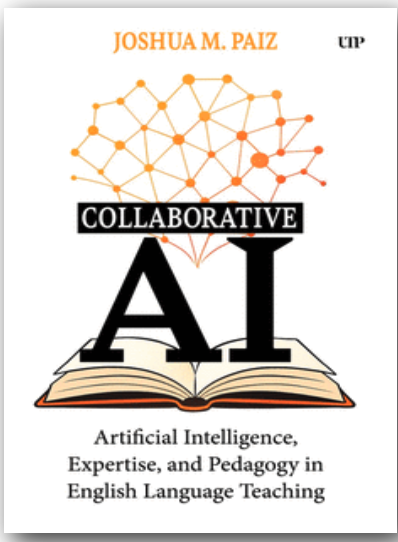
Pick up the book!
- University of Toronto Press
- Bookshop.org
- Amazon (if necessary)
Fun Finds
- Ixchell – Rediscovering Adventure Time (Side Quests show just released)
- Brent – The Way of Excellence by Brad Stulberg
- Joshua- Going Analog! Penguin Cafe Orchestra -Perpetuum Mobile & Avicii Penguins